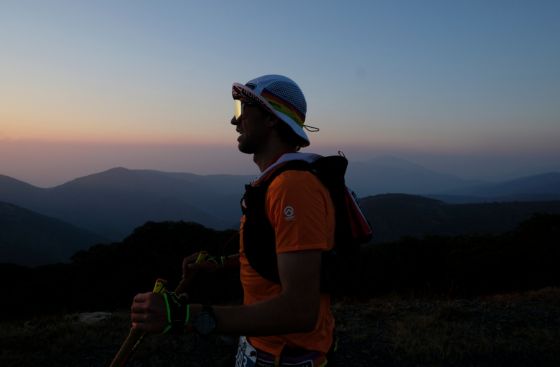
1. Understand the elements of the race you’re running
Each distance at UTK comes with unique challenges. Know your route and what it involves:
Here are the basic stats of each race at UTK:
- Kosci30 (~32km / 610m gain)
- Kosci50 (~50km / ~1,300m gain)
- Kosci100 (~106km / ~2,892m gain)
- KosciMiler (100 miles / ~4,710m gain)
For your chosen race distance understand the following:
- When will you encounter notable climbs and descents
- Where are the flatter more runnable sections
- At what distance are your aid stations located (crewed and uncrewed)
- What is the distance and expected time between each aid sation
- What nutrition and hydration will you carry between each aid station and how will you carry and access this nutrition/hydration
- What nutrition do you need to pick up at each aid station
- Where on the course can you make the most of your strengths as a runner
- Where on the course do you need to mentally lock in and focus on just ‘getting the job done’
2. What to focus on in the final 5 weeks of training
You’ve (hopefully) done the base work and you feel fit and for the most part, ready for race day. Here are a few things to dial in, in this final block of training.
a) Train on similar terrain & conditions
- Focus your remaining medium and long runs on race day specific terrain: runnable singletrack, technical singletrack, and match elevation (climbs & descents).
- If you can’t train on the course, seek similar trails or utilise treadmills/stairmaster to get specific with the elevation incline you’ll encounter.
- Practice power-hiking: There are likely moments where you’ll hike, so practice and become efficient. Understand the amount of hiking you’ll likely do on race day and mimic this in you long to medium training runs.
b) Dial in your Nutrition and Hydration
Practice exactly what and when you’ll eat and drink on race day.
- Identify your intake targets and practice this in your medium to long runs:
- Carbohydrates/hour
- Electrolytes/hour
- Water: Millerlitres/hour
- Caffeine/hour
- Identify the timing cadence of your intake (for example, 1 gel every 20min and drink to thrist)
- Identify and practice what you’ll eat for dinner the night before your race and the morning of your race. Practice what you’ll eat prior to your remaining long runs.
- Identify how you’ll hit these targets. Will you use gels, chews, carbohydrate rich drinks, electrolyte mixes, sodium tablets, caffeinated gels, caffeine tablets, real foods (bread, soup, noodles, fruits, chips, smoothies, energy bars, vegetables, etc) — find whatever your gut tolerates best and practice with it, now!
- How and where will you carry all of these items? Load up your pack with what you need to carry on race day and practice carrying it on your medium to long runs. Find out if it bounces around too much, if you can easily access it, dial in these elements.
- Identify what will be available at aid stations (check the race website). Can you use any of these provisions or will you need to carry your own?
- Again, know where your aid stations are, so you know when you can restock on water, drink mix and other items. Have a plan for what you’ll pick up and don’t forget to drop your rubbish at aid stations.
Do not introduce anything new on race day — food, shoes, or hydration options. Unless, of course, you’re in a real pickle and everything you’ve tried isn’t working.
c) Gear up & test everything
UTK has a strict mandatory gear list. Prepare your mandatory gear now identify the following::
- Understand how you’ll pack it in your race vest.
- How will you keep it dry?
- How will you access all the items whilst running (if possible). Make items you’ll likely use, easily accessible (gloves, buff, nutrition, waterproof jacket)
- How will you minimise the bulkiness of your pack and reduce ‘bounce’ of your pack whilst you run.
In the final weeks:
- Do multiple long runs carrying your full mandatory kit, including what you’ll wear, carry, and eat/drink.
- ‘Wear in’ any brand-new shoes, socks, shorts, packs, etc. to reduce the chances of blisters and chaffing.
- Practice night running with your headlamp if you’ll run in the dark.
- Practice running with any anti-chafe ointments, sunscreen, etc, you may use on race day.
3. Tapering tips for the final 3-2 weeks
Your biggest job is to rejuvenate, recover, stay healthy, and sharpen mentally.
Reduce Volume, Maintain Quality:
- Start tapering ~3-2 weeks out: Gradually reduce weekly volume (distance/time)
- Keep intensity: maintain the intensity you’ve been training with, be it tempo/hills/speedwork, etc. Reduce the volume of these sessions but maintain their frequency.
- Reduce long run distance.
- Listen to your body: Don’t push through niggles, sickness or unusual fatigue. Rest, rejuvenate and recover from these issues. Sleep is your best friend for recovery.
- Eat & hydrate well and sleep well during race week, not just the day/night before your race.
Goal: Arrive at the start line feeling fresh, rested, sharp, and healthy — not flat or overcooked.
4. Race week logistics- simple but often overlooked
a) Travel and accommodation
- Typically, there is a lot of driving involved at UTK
- Understand the time it will take to travel to and from your accommodation to the start/finish. Allow for traffic and disruptions
- Understand what facilities your accommodation will have and what you may need to bring
b) Weather & altitude awareness
Late November in the Snowy Mountains can throw anything at you — warm sunny days, windy, cold, or even snowy days at higher elevations.
- Monitor the weather daily in race week.
- Have extra race day clothing with your crew/in drop bags if the weather is rainy/very hot and you need to change.
- Practice running and accessing items in your kit that you’ll need in cold conditions (gloves, buff, waterproof jackets/pants, thermals).
- Don’t wait too long to put on items to keep warm.
- Layer wisely: don’t underdress, especially for the 100km and Miler distances with night segments.
- Respect the altitude — it may affect your RPE, heart rate and breathing. So run easier if you need to.
5. Race day strategy
a) Pacing
The number one mistake? Going out too hard.
- Start conservatively as it relates to your personal capabilities.
- Power-hike steep climbs instead of running.
- Save strength and energy for the final third of your race — Finish strong.
- Break the race into segments: aid station to aid station, climb to climb, crew point to crew point, etc.
b) Aid Stations & Support Crew
- Know the aid station locations and crew-access points.
- Go over the driving directions with your crew, simple but worth it.
- Plan what you’ll do at each station (water refill, food, sock change, drop rubbish, pick up items, etc). Give a checklist to your crew.
- If using drop bags, label them clearly and arrange items in them neatly. Include a checklist.
c) Mental preparation
Prepare for lows — fatigue, cramps, gut issues, doubt. They can happen to everyone.
Have a plan:
- Mantras: “Just keep moving” / “Create emptiness” / “I love this game” / “Just eat the damn gel”
- Embrace: Music, counting steps, nature, the views
- Break big goals into mini-milestones: “Get to the next aid station.”
- Remember why you signed up — and the benefits of doing hard things.
Also, work with your fellow runners, create a positive environment on the trails for yourself and for others.
And when you feel GOOD, make sure to enjoy it and amplify it!
7. After the finish line
Once you cross the line — celebrate! But also:
- Get dry and warm quickly.
- Eat something within 30 minutes.
- Reflect: What went well? What did you learn?
- Recovery is just as important as preparation. Sleep, hydrate & eat well in the days that follow your race. Move gently with minimal impact (walk, swim, cycle, yoga, etc)
Final thoughts
Ultra‑Trail Kosciuszko by UTMB is a great race and sure to be a memorable day — With the right preparation in these final weeks, you can line up confidently, calm, and ready to embrace whatever the trail throws at you.
Train smart, taper well, test your gear, and race with patience — and you’ll be on track for a memorable finish.
All the best, let it rip!
Bonus Section!
Utilise your Suunto Watch at Ultra-Trail Kosciuszko by UTMB
Using your Suunto watch as a tool — not just a tracker — can be a huge confidence booster at UTK. By preparing it well in advance, you’ll reduce stress, stay on course, and make better decisions hour after hour.
- Upload the GPX Route to Your Watch
- Download the correct GPX file from the official race website.
- Use the Suunto App to upload the route to your watch.
- Test the route on your watch
- Charge and sync your watch the day before your race. Simple but often forgotten.
- Set an ‘Auto Lap’ to signal when you need to fuel. This could be 20min, for example.
- Customise your Data Screens
Only display what you want and need. For UTK, that might be:
- Distance
- Elapsed time
- Average pace or current pace
- Altitude
- Ascent/descent
- Heart rate (if you use it)
- Time of day
- Navigation screen (map with route)
- Use fewer fields per screen to reduce distractions and preserve battery.
- Practice Using the Navigation Before Race Day
Get comfortable with:
- Following a loaded route
- What happens if you go off course (you’ll see a deviation line)
- Zooming in/out on the map
- Switching between data screens and route map