

Enter a keyword
Australia demands gear that works under extremes — searing sun, sudden storms, rugged terrain, long distances between resupply. The Suunto Vertical 2 isn’t just built for that, it’s made to excel there. In this article, we’ll dive into the features that make it stand out in our landscape, how it compares locally, and why it’s a serious contender for outdoor athletes and explorers across Australia.
Let’s look at what you get, and why it’s meaningful for Australian adventurers:
Feature | What it Offers | Why It’s Useful in Australia |
|---|---|---|
AMOLED LTPO display (1.5″, 466×466 px, ~2,000 nits) | Rich colour, sharp visuals, adaptive refresh | Makes maps, elevation profiles, and metrics easy to read — even under harsh sunlight or in forest shade |
Battery life | Up to 65 h with full GPS/double-band, 20 days in smartwatch mode, plus extended modes (Tour) | Long enough for multi-day treks, ultramarathons, or backcountry missions without constant recharging |
Offline maps & navigation tools | Downloadable topo maps with contour lines, route following, waypoint support | Essential off-grid, where there’s no mobile signal — in the Kimberley, Arnhem Land, Victorian bush, etc. |
LED flashlight (white & red modes, SOS) | Integrated into the case, with quick access | Handy in low light, camping, night navigation, emergency signalling — eliminates the need to carry a separate torch |
Upgraded optical HR sensor & faster internals | Improved heart rate accuracy, smoother UI response | Better data for high-effort runs, interval work, or varied terrain; less frustration with laggy interface |
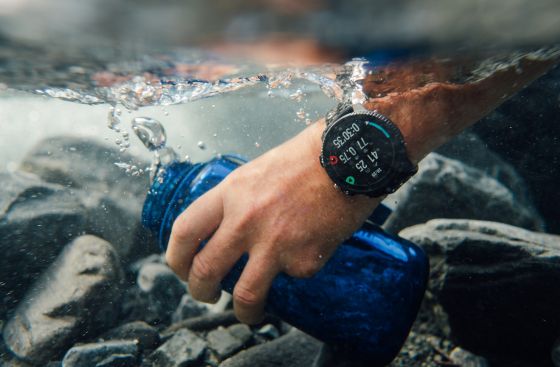
Durability & build | Sapphire crystal, 100 m water resistance, robust case materials (steel or titanium) | Able to withstand knocks, wet conditions, and environmental stress typical in Australian adventure settings |
Sport and tracking features | 115+ sport modes, Climb Guidance / elevation profiling, training analytics, route heatmaps | Flexibility to switch between trail running, cycling, hiking, swimming, and hybrid multi-sport use |
Here’s how those features translate into real advantages for Australians:
Visibility in harsh light
AMOLED’s brightness and contrast help when you’re on open plains, beaches, or alpine ridgelines where glare and reflections can ruin visibility.
Reliable off-grid navigation
In remote regions like the Outback, national parks, or the Flinders Ranges, having offline maps + fallback waypoints means you’re not just relying on breadcrumbs or compass alone.
Endurance for long trips
Whether your trip is several days in the Kimberley or a multi-day hike in the Grampians, 65 hours of GPS gives you breathing room — and you can extend further with low-power modes.
Integrated lighting — one less thing to pack
That built-in LED torch means one less battery or device. Set up camp in dusk, find gear in your pack, or manage emergencies without fumbling.
All-weather toughness
From monsoon storms in the Top End to scorching summer heat in central Australia, this watch is built to take it.
Training + adventure combined
Many Aussies train in the outdoors — trail runs, mountain biking, cross-training. The Vertical 2 handles both serious training and rugged exploration in one package.
Battery usage will vary — using full maps, dual-band GPS, flashlight, etc. will reduce the quoted maxima.
No solar charging — Suunto has removed the solar ring that older Vertical models offered.
Optical HR limits — like all wrist sensors, extremes (e.g. fast sprints, irregular motions) may still need a chest strap for highest accuracy.
Size and comfort — 49 mm case is substantial; smaller wrists may find it bulky in daily wear.
In the local market, you’ll likely compare it to Garmin, Coros, even Polar. Some early impressions:
Versus Garmin Instinct / Fenix: Vertical 2 offers premium materials (metal bezel, sapphire), maps out-of-box, AMOLED, and flashlight. Tom’s Guide notes it beats some Garmin smartwatch features.
Versus its predecessor (Vertical 1): Major shift in display (MIP → AMOLED), upgraded internals, added flashlight, loss of solar, but gains in sustained battery performance.
Value perception: Suunto positions this at a premium outdoor bracket, but in AU pricing / import / warranty, buyers will compare the specs / durability / software value vs more established brands.
Multi-day bushwalks: Load your route, track elevation splits, use the flashlight for night stops, and rely on battery endurance to last when solar won’t help.
Trail running & ultramarathons: Switch between performance and power-saving GPS modes, track your climb, and navigate unfamiliar terrain with maps.
Bikepacking / remote cycling: Use it in place of a separate bike computer, with route guidance, power metering (if paired), and map overlay.
Everyday + expedition crossover: Receive notifications, track sleep and HRV, and then head into the bush without swapping watches.
Sign up for our newsletter and stay up-to-date on the latest news, product updates, and exclusive offers. Join our community of loyal customers and be the first to know about exciting developments. Enter your email address below to subscribe.